Essex Property Market: Why Lifestyle Is Changing The Commuter Equation
By Ross Chimes, Area Branch Partner, Durden & Hunt
Recent Rightmove data shows a softening in average asking prices across some Essex commuter hotspots. However, this shouldn’t be mistaken for a lack of demand. What we are seeing at Durden & Hunt is a market that is normalising after the exceptional activity of the Covid era, with buyers becoming increasingly focused on value and lifestyle.
More fundamentally, the way buyers assess locations has changed. Before Covid, proximity to London was often one of the biggest considerations when choosing where to live. For many, a five-day-a-week commute meant that being as close to the capital as possible was worth paying a premium for.
Hybrid working has changed that equation for some. If someone now travels into London only two or three days a week, they may be much more willing to live further from the capital if it means getting more for their money. An extra bedroom, a larger garden, off-street parking or simply a better quality of life can be a compelling trade-off for another 10 or 15 minutes on the journey.
Higher borrowing costs have reinforced this behaviour. Buyers are scrutinising their budgets more closely and comparing neighbouring towns to understand where their money can work hardest. That is creating opportunities across a much broader part of Essex.
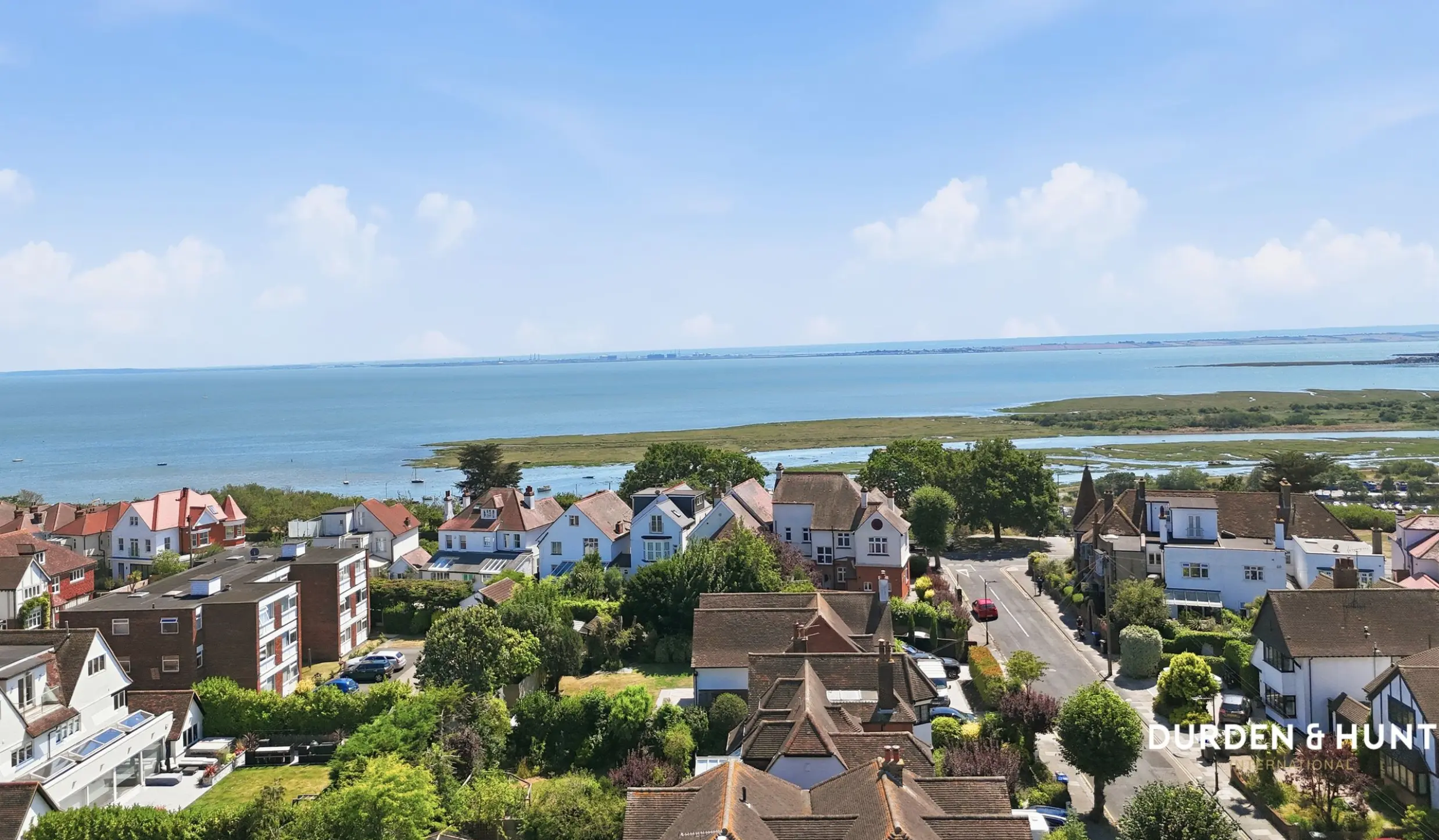
Lifestyle matters more than ever. The appeal of locations such as Leigh-on-Sea, Rayleigh, Chalkwell and Westcliff-on-Sea now extends well beyond their traditional commuter credentials. Leigh-on-Sea is a good example. Its London connections remain important, but they are only part of the attraction. The coastline, restaurants, independent businesses, schools and strong sense of community create a genuine lifestyle proposition. Increasingly, buyers aren’t choosing Leigh-on-Sea simply because they can get to London. They are choosing it because of how they can live when they are not working.
For someone commuting into the capital a few days a week, that can be a very attractive proposition: retain access to London when needed, while spending the majority of the week somewhere offering more space and quality of life. The question is increasingly shifting from “How quickly can I get to London?” to “What do I want around me when I’m not in London?” That is a significant change in the way people are assessing property.
We are also seeing greater willingness to consider neighbouring towns where buyers can make their budgets work harder. For some, moving slightly further afield can mean an additional bedroom, a larger garden or off-street parking. That can be a worthwhile trade-off, particularly when the commute is no longer five days a week.
This is creating opportunities in locations such as Rochford, Wickford and Hockley, where buyers may be able to secure more property for their money than in some of the more expensive commuter markets. It also means that a fall in average asking prices in one location does not necessarily tell the whole story.
Buyers are increasingly moving between markets, comparing what they can achieve in one town with another and deciding whether a slightly longer journey is worthwhile for a better overall property and lifestyle proposition.
This does not mean established commuter locations have lost their appeal. Billericay, Chelmsford and Brentwood remain highly desirable, and there continues to be strong demand for the right homes in the right locations. What has changed is the balance of priorities. After the exceptional demand seen either side of Covid, buyer behaviour has become more measured.
Buyers are comparing locations, scrutinising value and looking beyond the traditional definition of a good commuter town. Ultimately, the Essex property market is becoming more diverse, more lifestyle-led and more nuanced. For many buyers, the answer is no longer simply to live as close to London as possible.
It is to find the right balance between commute, space, value and quality of life - choosing a home that works not just on the days they travel into the capital, but seven days a week.